Smart AI: A Complete Guide to Smarter Automation, Innovation, and Future-Ready Technology
The dawn of 2026 has brought a paradigm shift in technology that few envisioned a decade ago. We have moved beyond simple “chatbots” and entered the era of Agentic Intelligence. Today, Smart AI is not just a tool; it is a collaborative partner that anticipates needs, automates complex workflows, and drives innovation faster than ever before.This comprehensive guide will explore how Smart AI is transforming industries, enhancing productivity, and preparing businesses and individuals for a future-ready digital landscape.
The Evolution of Intelligence: From Algorithms to Autonomy
AI has evolved dramatically over the years. Early systems were reactive—you asked, it answered. Modern Smart AI, however, is proactive.AI can now solve multi-step issues, comprehend context in text, voice, and vision, and carry out difficult tasks with no human oversight thanks to sophisticated neural networks.
The “Smart” in Smart AI comes from integrating machine learning with real-time sensory data. Today, AI operates beyond desktops: it resides in smart city sensors, hospital diagnostic systems, and autonomous logistics networks. This evolution from narrow AI to versatile agentic AI represents the most significant technological leap since the internet’s inception.
Smarter Automation: Redefining the Modern Workforce
What is Cognitive Automation?
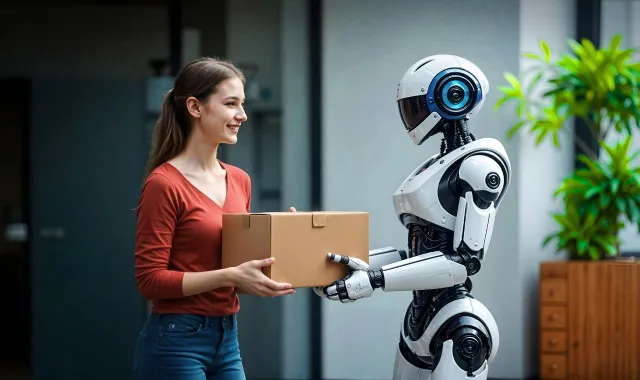
Traditional automation handled repetitive tasks, like transferring files. In 2026, Smart AI employs Cognitive Automation, making qualitative decisions. For instance, a legal AI doesn’t just archive documents—it reads, identifies compliance risks, summarizes case law, and drafts preliminary briefs for human review.
Human-AI Synthesis
This transformation has created the role of AI Orchestrators. Humans now manage fleets of digital agents, allowing them to focus on strategy, ethics, and creative direction. Rather than replacing jobs, Smart AI enhances human capabilities, fostering collaboration between humans and machines.
Innovation Across Industries: The 2026 Impact
Healthcare
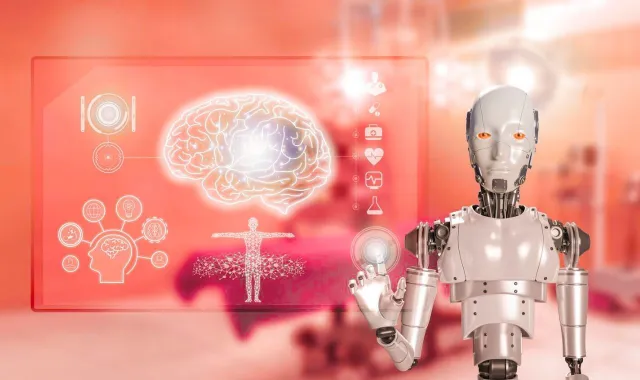
AI can now predict patient deterioration hours before traditional signs appear, improving outcomes and saving lives.
Finance
Algorithmic trading has evolved into Ethical Arbitrage, balancing profit with Environmental, Social, and Governance (ESG) considerations.
Manufacturing
Fully automated “Dark Factories” are now circular, recycling waste materials in real-time to reduce environmental impact. Smart AI optimizes production lines for efficiency and sustainability.
The Architecture of Modern AI Systems
Smart AI relies on three core technologies:
- Large Multimodal Models (LMMs) – process video, audio, and tactile data simultaneously.
- Edge Computing – allows AI to operate on-device for real-time decisions.
- Quantum-Enhanced Processing – accelerates problem-solving and complex simulations.
AI Comparison
| Feature | Legacy AI (Pre-2024) | Smart AI (2026) |
| Data Interaction | Text-based input/output | Multimodal (Voice, Vision, Sensory) |
| Autonomy Level | Requires constant prompting | Autonomous “Agent” behavior |
| Learning Style | Static training sets | Continuous real-time learning |
| Hardware | Cloud-dependent GPUs | Edge computing & Neuromorphic chips |
| Primary Goal | Task completion | Goal-oriented problem solving |
| Human Interface | Keyboard and Screen | Natural language & Neural interfaces |
Future-Ready Technology: Preparing for the Next Decade
The most critical skills in 2026 are Prompt Engineering and System Design. Professionals now focus on linking AI tools to create cohesive ecosystems.
Small Language Models (SLMs)
Companies are training specialized AI models on proprietary data for enhanced expertise while maintaining data privacy. For example, a medical research firm might deploy an SLM focused solely on oncology data, accelerating drug discovery.
The Ethics of Autonomy: Navigating the Moral Compass of AI
Explainable AI (XAI)
The “Black Box” problem, where AI decisions are opaque, is addressed through XAI. Regulations like the EU AI Act require AI systems affecting human life to provide transparent, human-readable explanations.
AI Alignment
Organizations now employ Chief AI Ethics Officers to ensure human-centric AI, prevent bias, and maintain ethical autonomy. The goal is to enhance human agency rather than replace it.
Smart Cities and AI-Integrated Environments
Smart Cities leverage AI-driven infrastructure to manage traffic, energy, and safety.
- Traffic lights adapt to real-time flow.
- Homes become “Grid-Aware,” optimizing energy use and selling excess power back to the grid.
This integration demonstrates the transformative power of Smart AI in daily life.
Personalized Education: The AI Tutor Revolution
AI tutors now deliver hyper-personalized learning, adjusting curricula in real-time based on student performance.
- Students in remote areas access the same quality education as those in metropolitan cities.
- AI encourages critical thinking, asking “why” and “how” to foster deeper understanding.
The Economic Impact of the AI Renaissance
The AI Renaissance boosts productivity, particularly in the service sector. Examples include:
- Same-hour delivery through AI-optimized logistics
- Resilient supply chains resistant to disruptions like pandemics or climate events
Global debates on Robot Taxes and Universal Basic Income (UBI) highlight the need for equitable distribution of AI-driven wealth.
Cybersecurity in the Age of Smart AI
The rise of Smart AI also escalates cybersecurity threats:
- AI-generated Deepfakes and phishing attacks
- Countermeasures: Self-Healing Networks that autonomously detect, isolate, and patch threats
In this environment, the best defense is smarter AI.
The Role of Generative Media and Creativity
AI is redefining creativity:
- Procedurally generated films and games combine human storytelling with AI-generated assets.
- Lowers the barrier to entry for creators and encourages diverse voices globally.
The era of democratized creativity is here.
Sustainable AI: Solving the Energy Crisis
Green AI initiatives have reduced AI’s carbon footprint:
- Small Modular Nuclear Reactors (SMRs) and geothermal energy power data centers
- Neuromorphic chips mimic the brain, delivering efficiency and low power consumption
Now, Smart AI is environmentally sustainable and accessible on everyday devices.
The Intersection of AI and Biotechnology
Generative Protein Design
AI creates new proteins for environmental cleanup and medical treatments.
Brain-Computer Interfaces (BCIs)
Humans can communicate with AI through thought, aiding medical patients and hinting at direct neural-AI links for the 2030s.
Global Governance and AI Sovereignty
Nations protect data and model weights, while international treaties ensure AI weapon safety.
- UN-established World AI Organization sets global safety standards.
- Prevents a digital divide, ensuring equitable AI access worldwide.
Conclusion

Smart AI is the defining technology of our era:
- Drives smarter automation
- Sparks unprecedented innovation
- Builds a future-ready society
By embracing Human-AI collaboration, we can tackle global challenges—from climate change to disease—and unlock boundless potential.
Frequently Asked Questions (FAQ)
Q1: What is the difference between Smart AI and AI from 2023?
A: 2023 AI was generative and reactive. Smart AI in 2026 is proactive, autonomous, and capable of multi-step reasoning across diverse data types.
Q2: Will Smart AI replace all human jobs?
A: No. It replaces functions, not entire roles. Humans remain crucial for empathy, ethical judgment, and creative oversight.
Q3: How secure is my data with Smart AI?
A: Security has improved with on-device AI and local models, keeping personal data private. Always use platforms compliant with regulations like the EU AI Act.
Q4: How can my business become future-ready for AI?
A: Focus on data hygiene, AI literacy, and specialized Small Language Models for industry-specific tasks.
Q5: Does AI help the environment?
A: Yes. Green AI initiatives reduce energy usage, optimize logistics, and lower carbon footprints.
Q6: Can Smart AI think or feel like a human?
A: No. It simulates empathy and reasoning but lacks consciousness or emotions.
Q7: How is AI used in education?
A: AI provides 24/7 personalized tutoring, assists with grading, and encourages critical thinking.
Q8: What are neuromorphic chips?
A: AI-designed chips that mimic the human brain for energy-efficient computation.
Q9: How does Smart AI affect healthcare?
A: Predicts patient deterioration, designs proteins, and improves drug discovery processes.
Q10: What is the role of Smart AI in smart cities?
A: Manages traffic, energy, public safety, and integrates with homes for grid-aware energy optimization.